What's causing the pain?
Myocardial infarct.
Transfer to cath lab.
Trouble with sleeping?
Worries and anxiety.
ER is open.
Can't move your right side?
And your speech doesn't make sense?
Head CT and then....
The spider bit you
Redness, swelling, and fever.
Here's doxcycline.
Vaginal bleeding.
What is causing this problem?
Not your period.
Wednesday, September 26, 2012


Saturday, July 14, 2012
Dr. Raul Ruiz for Congress in 2012

Sometimes, life surprises you with these incidental meetings that seeds the beginnings of life long friendships. Raul's story is awe-inspiring. He comes from a family of immigrant farm workers from the Coachella Valley desert. To get into college, he went to his neighbors' doors and made a promise, "Help me pay for college. I promise to come back here and make a difference."
Not only did he make it to college, but he went to Harvard and graduated with three degrees (MD, MPH, MPP). Afterwards, he went on to complete an emergency medicine residency and an international medicine fellowship.
Now, he is a community ER doctor back in the Coachella Valley desert and Associate Dean at the University of Riverside School of Medicine. He made a promise many years ago and kept it.
When Raul told me he was running for Congress, it just made sense to me. He is the kind of leader that I want to see helping create laws and addressing disparities. Raul is an emergency doctor who has the back ground in public health and public policy tools to make a positive impact.
Would you like to see someone who understands medicine, policy, and public health to help create legislation?
Do you want to have someone in Congress who keeps his promises?
Please make a donation to Dr. Raul Ruiz. Even $5 makes a difference in this grassroots campaign. Here's the link: www.drraulruiz.com
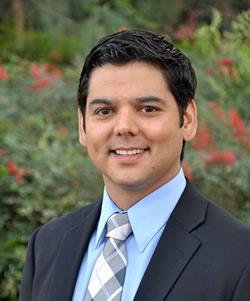
Raul Ruiz, MD, MPH, MPP
Friday, June 29, 2012
International Ultrasound Resources
INTERNATIONAL ULTRASOUND RESOURCES
By Dr. Sachita Shah

BOOKS : Obviously there are many within our specialty, but these are
some ultrasound books outside of EM that have pertinent info for
practice in low resource settings and/or are written for generalist
health care providers
1) Cristoph Dietrich, MD, and colleagues have published a freely
downloadable, online full color textbook, including special chapters
on US in HIV and tropical diseases. It is an in depth resource that is
made more for experienced clinician-sonographers, and written in high
level /technical english. Great work and so inspiring that it is free!
Please check it out at this link: http://www.efsumb.org/ecb/ecb-
2) Ultrasound: A Practical Approach by William Marks. http://www.amazon.com/
3) Training in Diagnostic Ultrasound Essentials, Principles and
Standards, WHO Study Group report. http://apps.who.int/
4) Manual of Diagnostic Ultrasound in Infectious Tropical Disease
(covers abdomen only, available by amazon too) http://www.wfumb.org/
5) Partners In Health Manual of Ultrasound for Resource Limited
Settings (free, electronic book in pdf, simple english, point-of-care
approach to abd/ob/dvt/skin/procedures etc) www.pih.org/publications/c/
COURSES:
1) Short Course on Abdominal Ultrasound in Tropical Disease
http://www.tropicalultrasound.
This course (YEARLY, April, Italy)is designed for clinicians who wish
to acquire basic skills in ultrasound of the abdomen and a general
overview of Ultrasound in Tropical Medicine. Imaging specialists who
want to acquire knowledge in the field of Infectious Diseases and
Tropical Medicine can benefit from this course as well. It is also
designed for MDs who plan to work in tropical/resource poor areas or
who are already experienced in field work but need to refine their
skills in this diagnostic tool.
2) Clinical Ultrasound in Tropical Infectious Diseases
http://www.georgiahealth.edu/
Join the faculty of the Instituto de Medicina Tropical, Alexander von
Humboldt, Cayetano Heredia, Lima, Peru; the Center of Operational
Medicine, Section of Clinical Ultrasound, Georgia Health Sciences
University; and the University of Pavia, Division of Infectious and
Tropical Diseases, IRCCS S. Matteo Hospital Foundation as they co-host
the first Clinical Ultrasound in Tropical Infectious Diseases course
in Lima, Peru, October 21-26, 2012. Providers with experience and/or a
special interest in clinical tropical medicine or infectious disease
with ultrasound experience are invited to attend. This unique course
consists of lectures, demonstrations, and small-group clinical rounds
for live ultrasound scanning.
------------------------------------------------------------------------------------------------
Dr. Sachita Shah is Assistant Professor at UW Division of Emergency Medicine in Seattle. She completed her US fellowship at Alameda County Medical Center-Highland Hospital. She is the first author of "The Partners in Health Manual of Ultrasound for Resources Limited Resources." (See the link in number 5 above)
By Dr. Sachita Shah

BOOKS : Obviously there are many within our specialty, but these are
some ultrasound books outside of EM that have pertinent info for
practice in low resource settings and/or are written for generalist
health care providers
1) Cristoph Dietrich, MD, and colleagues have published a freely
downloadable, online full color textbook, including special chapters
on US in HIV and tropical diseases. It is an in depth resource that is
made more for experienced clinician-sonographers, and written in high
level /technical english. Great work and so inspiring that it is free!
Please check it out at this link: http://www.efsumb.org/ecb/ecb-
2) Ultrasound: A Practical Approach by William Marks. http://www.amazon.com/
3) Training in Diagnostic Ultrasound Essentials, Principles and
Standards, WHO Study Group report. http://apps.who.int/
4) Manual of Diagnostic Ultrasound in Infectious Tropical Disease
(covers abdomen only, available by amazon too) http://www.wfumb.org/
5) Partners In Health Manual of Ultrasound for Resource Limited
Settings (free, electronic book in pdf, simple english, point-of-care
approach to abd/ob/dvt/skin/procedures etc) www.pih.org/publications/c/
COURSES:
1) Short Course on Abdominal Ultrasound in Tropical Disease
http://www.tropicalultrasound.
This course (YEARLY, April, Italy)is designed for clinicians who wish
to acquire basic skills in ultrasound of the abdomen and a general
overview of Ultrasound in Tropical Medicine. Imaging specialists who
want to acquire knowledge in the field of Infectious Diseases and
Tropical Medicine can benefit from this course as well. It is also
designed for MDs who plan to work in tropical/resource poor areas or
who are already experienced in field work but need to refine their
skills in this diagnostic tool.
2) Clinical Ultrasound in Tropical Infectious Diseases
http://www.georgiahealth.edu/
Join the faculty of the Instituto de Medicina Tropical, Alexander von
Humboldt, Cayetano Heredia, Lima, Peru; the Center of Operational
Medicine, Section of Clinical Ultrasound, Georgia Health Sciences
University; and the University of Pavia, Division of Infectious and
Tropical Diseases, IRCCS S. Matteo Hospital Foundation as they co-host
the first Clinical Ultrasound in Tropical Infectious Diseases course
in Lima, Peru, October 21-26, 2012. Providers with experience and/or a
special interest in clinical tropical medicine or infectious disease
with ultrasound experience are invited to attend. This unique course
consists of lectures, demonstrations, and small-group clinical rounds
for live ultrasound scanning.
------------------------------------------------------------------------------------------------
Dr. Sachita Shah is Assistant Professor at UW Division of Emergency Medicine in Seattle. She completed her US fellowship at Alameda County Medical Center-Highland Hospital. She is the first author of "The Partners in Health Manual of Ultrasound for Resources Limited Resources." (See the link in number 5 above)
Thursday, June 28, 2012
Intro to Social Media for Newbie MDs

Have you ever Googled your name to find vitals.com or
healthgrades.com as the main link to your professional face online?
What hurts even more is when you have a one out of four star
rating by an anonymous person.
Today, you will learn three places to get started in social
media.
www.linkedin.com
Go to LinkedIn and create a profile. This is free. Put up a professional picture online and parts of your
CV. Remember, this is the internet
and everything your put up in now public. So, no social security or DEA numbers.
www.twitter.com Create a twitter account with your real name and another professional picture. Do some searching on twitter. Find other MDs, RNs, Med students, PharmDs, etc to follow. Tweet useful links, thoughts, comments, & questions. Again, remember this is on the World Wide Web so imagine everything you put up will be published in the NYTimes Sunday Edition.
www.blogspot.com or www.wordpress.com Create a blog. A blog is shortened for weblog. It’s an online journal, but not everyone wants to hear about what you had for dinner or who you have a crush on. Write short articles on health related topics. Nothing that violates HIPPA or patient confidentiality. Use lots of pictures.
Be fairly diligent in the above activities, maybe 1-2 posts/tweets per week. Wait 6 months and do a google
search with your name. You will
see a difference!
Tuesday, April 17, 2012
Meditation for Physicians

When stepping into a new patient's room, I must clear my mind completely. To make a diagnosis, it's crucial to listen with 100% attention. If I think about the patient I saw before, or what lab result I need to look up, my focus becomes divided. One way to be more aware of the present moment is through meditation practice.
During medical school, Jon Kabat-Zinn lectured at the U. of Rochester and led us through various awareness exercises. One exercise was to eat a raisin very s - l - o - w - l - y, savoring the taste and texture. I still remember how potent the single raisin tasted.
Now, I've re-discovered him on the EM Tutorials Podcast (By Drs Chris Cresswell, Qasim Alam and Andrew Dean-Ballarat, Australia and New Zealand)
http://itunes.apple.com/nz/podcast/emergency-medicine-tutorials/id441003312
I highly recommend you download # 7 Breath Meditation and give it a try for a week. It's also FREE.
Monday, April 9, 2012
Bottlenecks
Once you've identified the time each patient spends at a certain step, you can identify which takes the longest.
NOW, you have identified the bottleneck.

Everything is dependent upon this bottleneck. Recall the rate limiting step (RLS) in chemistry. This step is typically a catalyst or rare substrate. It's the process that S - L - O - W - S everything else down. In the ED, this may be: time to get a lab report, a 5150 bed, or the the on-call dialysis nurse.
Use a multi-perspective approach by including RNs, Techs, ICU docs, etc. to reduce the time it takes in the slowest step. This can be challenging, but will reap huge rewards.
Lather, rinse, & repeat.
NOW, you have identified the bottleneck.
Use a multi-perspective approach by including RNs, Techs, ICU docs, etc. to reduce the time it takes in the slowest step. This can be challenging, but will reap huge rewards.
Lather, rinse, & repeat.
Monday, April 2, 2012
What are the important things to measure for ED flow improvement?

There are many metrics in the ED, ranging from patient satisfaction to % of Medicaid patients. To improve patient flow and identify bottlenecks, there are 10 steps and times that should be measured:
1. Door to Triage
2. Triage to MD (assuming MD is in triage)
3. Bed to RN
4. Bed to MD
5. MD to Decision (DC vs. ADMIT)
6) Imaging order to read
7) Lab order to results
8) Recheck of patient
9) DC to actually being out of ED
10) ADMIT to floor
If you add the total time of each of these steps, this equals total Length of Stay in ED (LOS).
Based upon the review of the time needed for each of step, an ED director can determine which areas need more effort and time to reduce the time in ED. This is crucial because patient satisfaction is linked to the overall time in ED.
Based upon the review of the time needed for each of step, an ED director can determine which areas need more effort and time to reduce the time in ED. This is crucial because patient satisfaction is linked to the overall time in ED.
Subscribe to:
Posts (Atom)
