Tuesday, September 8, 2009
Healthcare Cost Reduction Idea
Wednesday, August 12, 2009
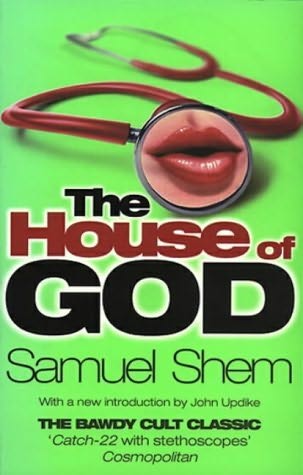
Why Medical Students Stay Up During Call
Roy Bausch: Simple. You're a mathemetician, right? Now, I get paid a fixed salary by the BMS, no matter how many hours I'm awake. You pay a fixed tuition to BMS, no matter how many hours you're awake. Therefore, the more I sleep, the more I earn per waking hour, and the more you stay awake, the less you pay per waking hour. Got it?
~House of God by Samuel Shem, MD
Thursday, June 18, 2009
Top 20 Tips for Intern Year
1. When ordering a test or taking any action on a patient, ask your self the question, “Why am I doing this?” If it doesn’t change the patient’s outcome, reconsider your plan.
2. Evolve your communication skills to the maximum. Keep your attendings, senior residents, nurses, patients, and patient’s families up to date on the plan.
3. Ask questions when you don’t know the answer. Its okay to ask the nurse and even the actual patient, “What do you think is going on?”
4. When you’re on call overnight and sleeping in your plush intern bunk bed, and a nurse calls you about a patient with abdominal pain, chest pain, or difficulty breathing, get out of bed & go to see them ASAP.
5. If a diabetic patient comes in with nausea and vomiting with no chest pain or SOB, still consider Acute Coronary Syndrome (ACS) in your differential.
6. If someone yells at you or criticizes you, ignore the instinctual reaction of defending your position. Simply state, “Sorry. Mea culpa. It won’t happen again.” Even if it was not your fault.
7. Be nice to nurses, BUT don’t always listen to them.
8. Teach something to a medical student, nurse, PA, a junior resident at any free moment. Spend the additional 2 minutes to P.I.M.P. Doctor comes from the Latin word, doctoris, which means teacher.
9. If you say you are going to be somewhere, or promise to do something, follow through. If you can’t, let them know as soon as you realize it.
10. Be generous with pain meds. It’s better to give narcotics to fakers than to have a person in really bad pain. In trauma patients, consider fast acting fentanyl 1 mcg/kg
11. Do the things that scare you and see the patients that you find challenging. Be aware of your backups in case you suck. Feel the fear, and do it anyway.
12. Try not to hook up with co-workers, nurses, med techs, etc.
13. Exercise regularly.
14. During vacation weeks, go somewhere that requires a flight. You’ll come back much more refreshed. Also, don’t request vacations in the first week of a rotation, you might be lost when you come back.
15. When calling a consult, be sure to know the patient. Then introduce yourself by name. Verify that it is the correct service. Ask for their name. Ask how they are doing today. Begin with, “This consult is for…” and tell them the rest. End the conversation with, ‘Do you have any other questions about this consult?”
16. Try not to call bogus consults. You will recognize them after you’ve been an intern for that service.
17. If you have an infant who is crying, inconsolable, and everything else is normal, get the lidocaine eye drops. It just might be a corneal ulcer.
18. In the ED, ask the patient, “What made you decide to come in TONIGHT?” and if it’s a chronic problem, “What does your primary medical doctor think about this?”
19. If it doesn’t make sense to you, question your attendings and senior residents in a diplomatic way. They are human and make mistakes too.
20. Forgive yourself for the mistakes b/c you will absolutely make them. Just learn from each. James Allen wrote, “Circumstances don’t make a man, they reveal him”
Monday, June 15, 2009
If you're thinking about EM, consider this:
Those ER docs miss everything.
Why don't you see the patient first, then call me?
It's 3:30AM, do you really need this consult now?
Order the MRI, then let me know if anything shows up.
Didn't you realize you needed EKG on all diabetic patients?
Ovarian torsion? Ultrasound is terrible at detecting that.
So what are you going to specialize in after you are done with ER?
Trauma surgeon: Call Anesthesia, we need an airway STAT!
How could they have missed the septic knee, inferior MI, AAA, etc?"
EM is a young specialty, and we need to develop a thick skin.
It's the ultimate fishbowl, and everyone questions your decisions on Monday.
Sunday, June 7, 2009
My Hero is Mel Herbert from EM Rap
My favorite speaker was Dr. Mel Herbert...
"Mel Herbert, MD, is an award-winning educator and full-time member of the faculty at the Los Angeles County / USC Medical Center Emergency Medicine Residency. Mel's talent at producing EM:RAP is a natural extension of his gift for teaching. Within the past few years, he's received the UCLA "Chairman's Teaching Award" and the "Golden Stogie" Award, the Cal/ACEP Education Award, the Emergency Medicine Residents Award for Teaching Excellence, and Honorable Mention for ACEP's Outstanding Speaker of the Year Award." ~ EMRAP
Here's a picture that a good friend and I got with him as he was departing. Woohoo!
Sunday, May 24, 2009
Society of Critical Care Medicine
I'm taking a course from the Society of Critical Care Medicine. I did not take an elective in the ICU during medical school, so my first TRUE experience will be on the PICU in July. This course was actually pretty helpful in reviewing the basics of ICU. Some tips I learned:
Always start with the ABCs.
Tachypnea is an omnious sign of sickness. Evaluate thoroughly
When a nurse calls you on call and tells you about a patient with dyspnea, get up, standup.
Rocuronium (a non-depolarizing agent) has an antidote - Sugammadex! I don't thinks it's been approved by the FDA yet.
Intubate starting from pt's right mouth and sweep the tongue. Have someone give you Sellick and the fish hook. Then use BURP myself and have another person hold it when i visualize cords.
Use the bougie as a tube exchanger.
Winter's formula: 1.5*HCO3 + 8 +/- 2
For every 10mmHg change in PCO2, there is a 0.8 change in pH.
Propofol can cause falsely elevated Pulse oximetry saturations.
After finishing up the Day 1 of the course, I went and hung out with surgical interns. Yes, they are normal people too. Good times.
p.s. Who knows how to calculate the delta-delta? Care to share?
Monday, May 4, 2009
My application essay for Cal/ACEP Rep for 2009
“Given one well-trained physician of the highest type, he will do better work for a thousand people than ten specialists.”
~ William James Mayo, M.D.
Emergency medicine is the youngest and most diverse medical specialty. We can reassure patients about H1N1 virus and their home BP measurement of 160/90, while detecting a pneumothorax on ultrasound and placing a chest tube on the trauma patient. If we choose to, we can become certified experts in pediatrics, toxicology, sports medicine, high altitude, & deep sea diving.
Because of this broad training, we have the ability to speak the language of every specialty: Monteggia’s fracture, Stanford Type A dissections, retinal detachments, retrograde urethrogram, Brugada syndrome, and ectopic pregnancy are words that even our astrocytes retain. Moreover, the ED is truly the front door to the hospital. Putting these factors together, I believe emergency physicians are uniquely poised to transform from the newbie to the "big dog" at the head of the medical community.
Our field has numerous strengths, yet there are many challenges. For example, we are legally responsible to see every patient regardless of ability to pay. Ironically, there is no funding set aside to pay for these visits. Upon graduation, some residents will work at an hourly wage for a healthcare corporation, while administrators skim heavy “management” fees off the top. Naturally, we need leaders who can represent Emergency Medicine in the political, medical, and business world.
My calling is to be the doctor with a business toolbox to represent physicians in these crucial areas. Today, I ask for your vote to begin my path towards making a difference not only for our patients, but also for you. Thank you. http://dr.samko.googlepages.com/